

eCommerce · 6 weeks

MindPanda built its own channel and pushed Amazon into second place.

MindPanda sell stress balls, journals and planners to people managing their own mental load. Years of marketplace trading had proved the demand. The project gave the brand a storefront it owns.

30-min call with a senior lead · Reply within 1 business day · NDA on request

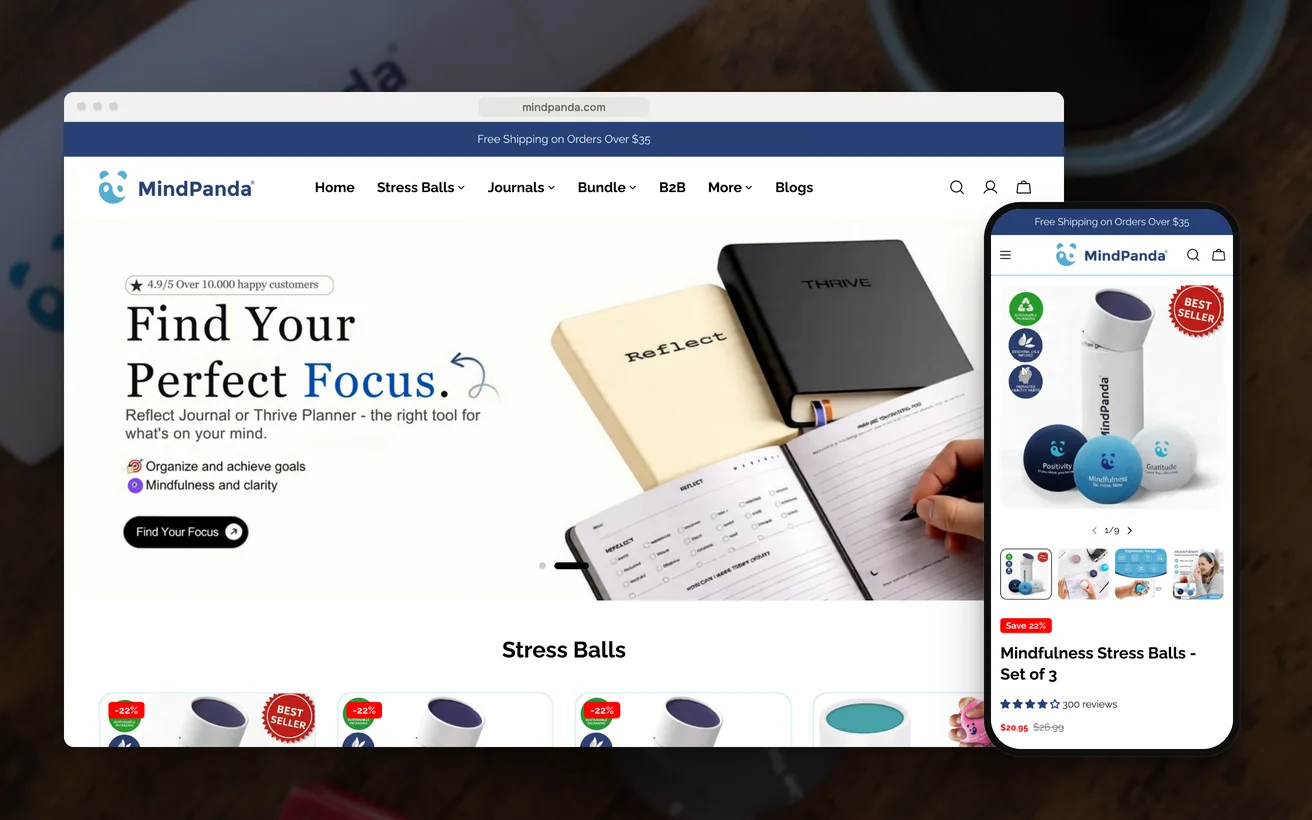
MindPanda's Shopify store on desktop and phone: the homepage and the stress balls product page
Client
MindPanda
Sector
Mental wellbeing products
Market
United States and the UK
Timeline
6 weeks
Services
Shopify Development, Migration, CRO
7 figures

Direct revenue

No.1

Channel, ahead of Amazon

As reported by the client.

01 The challenge

MindPanda make stress balls, journals and planners for people managing their own mental load. The products already worked. Years on Amazon had proved the demand, sharpened the listings and built a review history in both the United States and the UK. Very few brands reach that point without a store of their own.

What a marketplace does not hand over is the customer.

It sets the margin, holds the email address and can change either without warning. A brand in that position is renting its own demand. The risk is invisible in a good month, which is exactly why it goes unaddressed for years.

The obvious answer is a second storefront that mirrors the listings. That gives a catalogue in two places and no reason for anyone to choose the smaller one. So the brief was never to duplicate Amazon. It was to build a shop that could win a buyer the marketplace had already trained.

02 Our approach

UX

Buyers arriving from a brand advert are not scanning a results grid. So the site was planned around explanation rather than comparison: what the product is for, who it helps, and why the range exists at all. Marketplace copy does the opposite job, so nothing was going to be pasted across unchanged.

Technical

Two countries were treated as two storefronts running on one catalogue. A British buyer who meets dollars and a vague delivery estimate reads a warning rather than an offer. Shopify Markets was chosen so currency, pricing and the delivery promise switch automatically, and so nobody maintains a spreadsheet to keep both honest.

Conversion

The store had to sell what a marketplace cannot: bundles, the reason the product exists, and a brand that answers for itself. Copying a listing onto a product page loses that argument, because the marketplace version is faster to buy from and already trusted. Matching it was never the target.

03 Design & UX

The product page leads with use rather than specification. Somebody buying a stress ball is buying what it does on a difficult afternoon, so that comes before materials and dimensions. The comparison furniture of a marketplace listing was left out: bullet stacks, badge clutter and cross-sell rails. None of it helps a visitor who has already chosen the brand.

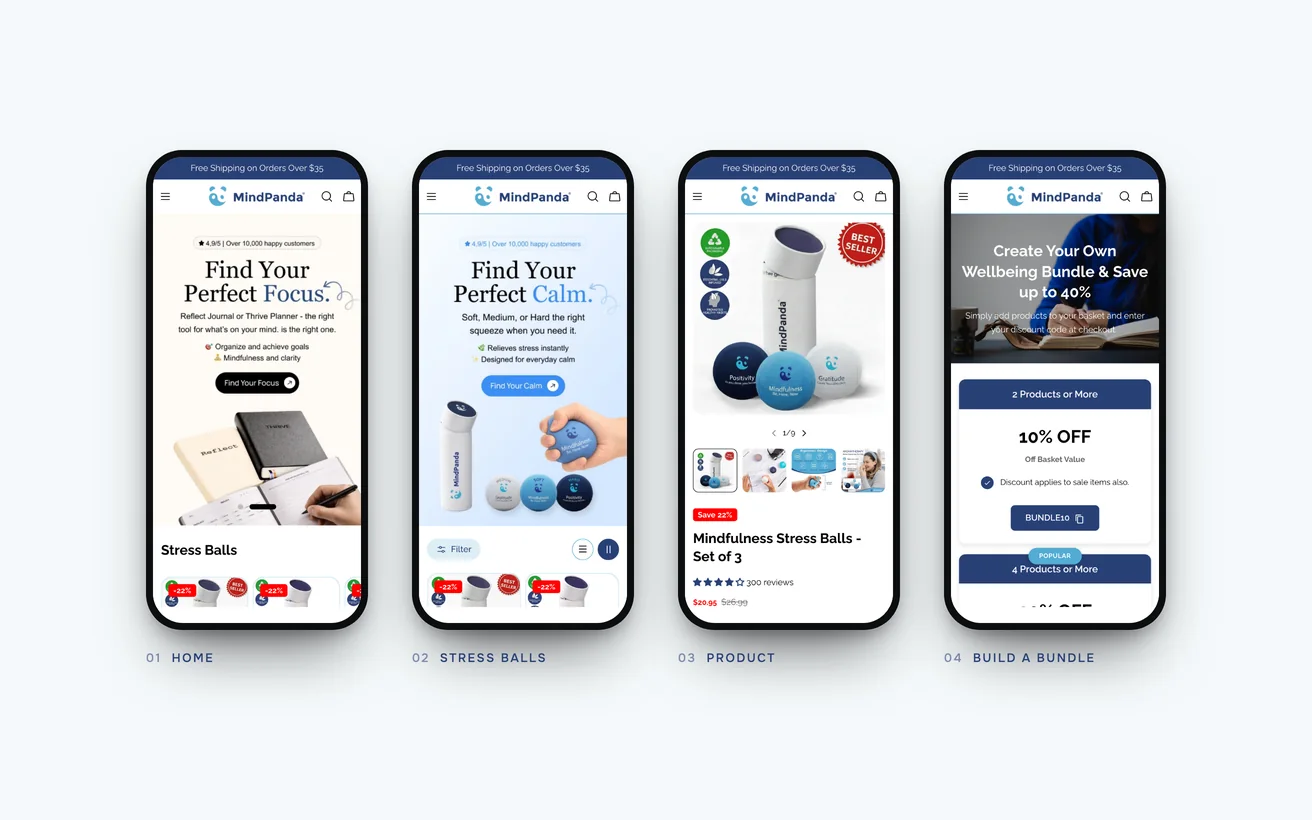
Most visitors arrive on a phone, so the page was built for a thumb. Imagery, price and the buy control sit inside the first screen, and the longer explanation unfolds beneath them. Bundles appear as a choice on the same page rather than in a collection of their own. The decision to buy two is made while looking at one.

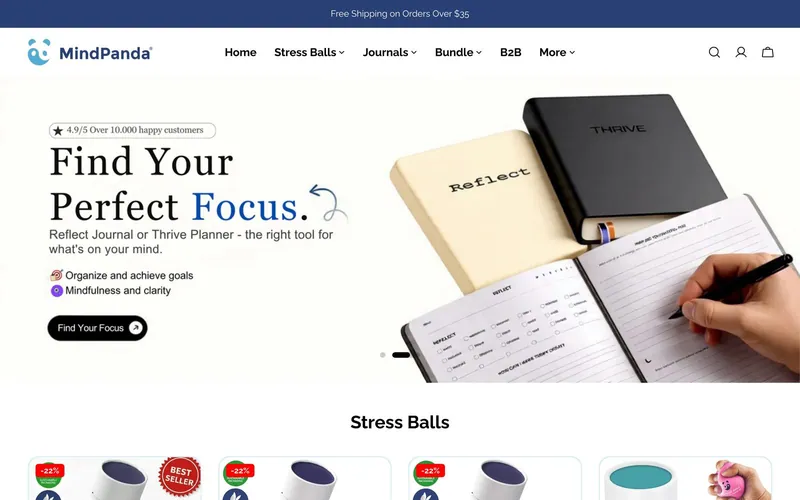
The MindPanda homepage on desktop

Rewritten, not ported

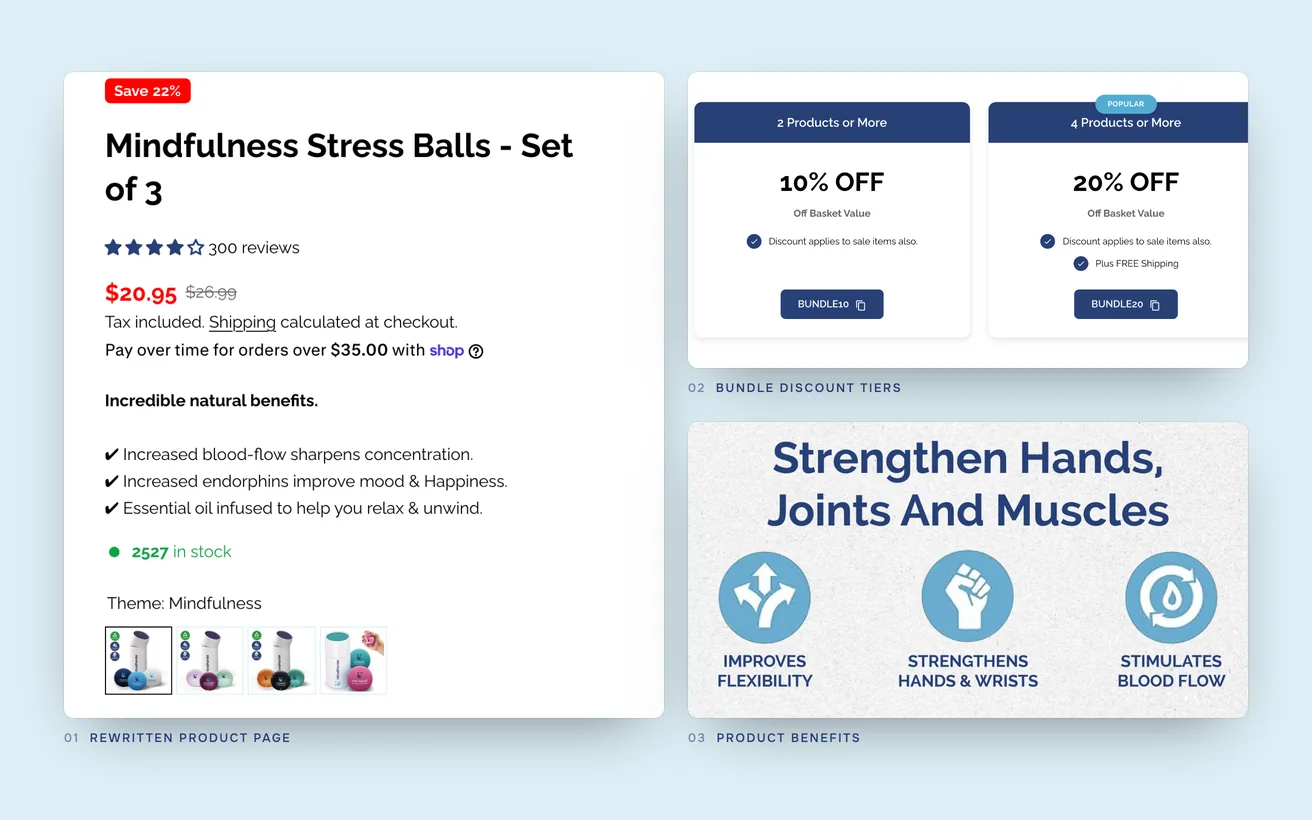
Titles written for marketplace search read as keyword strings on a brand page. Every product was rewritten for a reader who has stopped comparing.

Bundles where the choice happens

The decision to buy a set is made while looking at a single item, so the bundle sits on that page rather than in a separate collection.

Currency set by market

A British buyer should never meet dollars and an unclear delivery estimate, so pricing and the shipping promise change with the market rather than with a note.

Reviews requested after use

A stress ball earns an opinion in the week after it arrives, not on the doorstep, so the request is timed to use rather than to delivery.

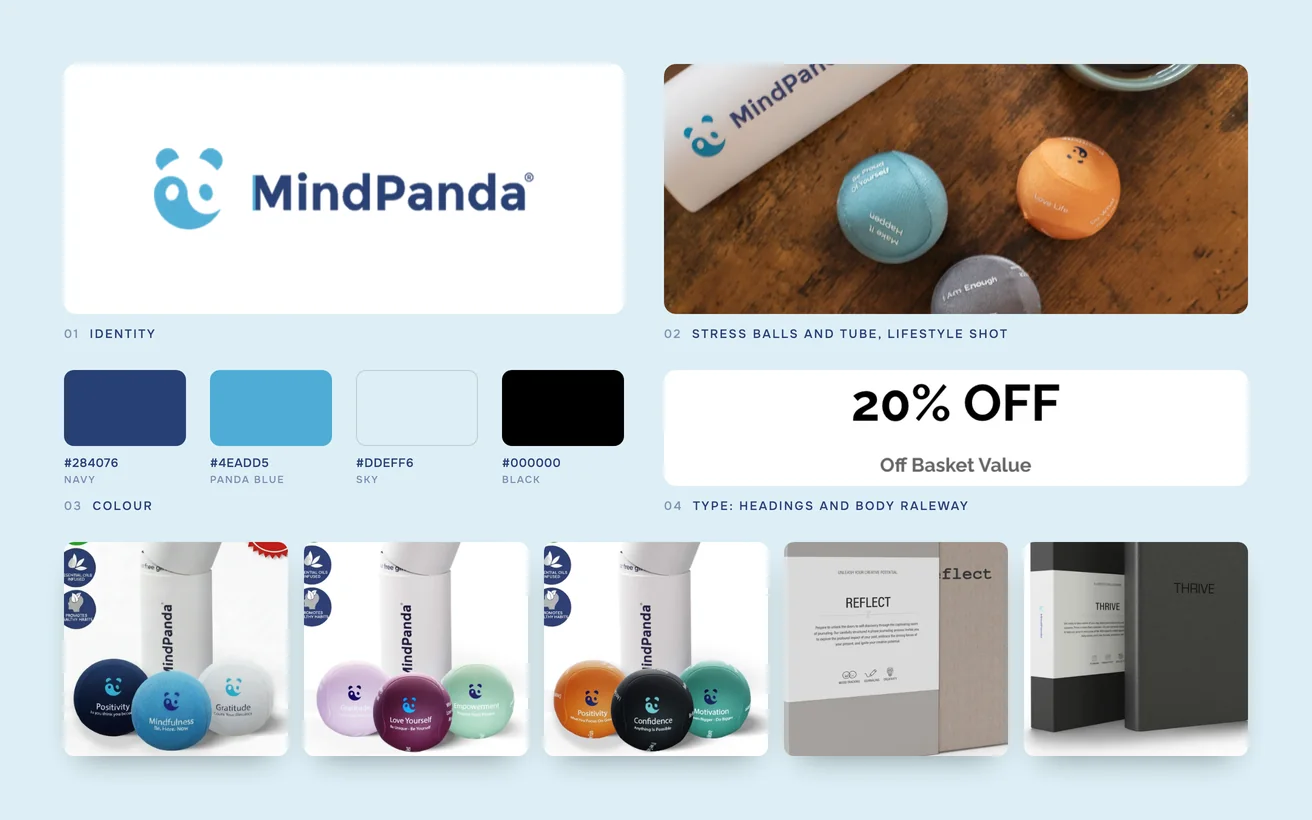
Mindpanda brand board: logo, colour palette, typography, stress balls and tube, lifestyle shot and the product range

04 Development & technical implementation

The catalogue was ported out of the marketplace in one structured pass rather than product by product. Variants, images and inventory came across together, and the rewritten copy was layered onto those records afterwards. Matrixify handled the bulk work, which kept merchandising decisions with the team instead of losing them in retyping.

Shopify Markets runs the United States and the UK as separate markets inside a single admin. Currency, pricing and the delivery promise are set per market and resolve for the visitor without intervention. Klaviyo holds the customer record the marketplace never released, and GA4 reports the two markets apart so performance is not averaged into one misleading line.

One thing no build can engineer around is review history. Years of it sit on the marketplace and cannot be moved, so the store had to earn its own from the first week. The request goes out after delivery, timed to when the product is in use, and the theme reserves space for the answers before they exist.

Close-ups of MindPanda: the rewritten product page, the bundle discount tiers and the product benefits panel

05Key solutions

Key solutions.

The parts of the build a visitor would point at.

  1. 01

    Two markets, one admin

    The United States and the UK each get their own currency, pricing and delivery promise, with no second storefront to maintain.

  2. 02

    Structured catalogue migration

    Variants, images and inventory moved across in one pass, so the range arrived complete rather than being retyped page by page.

  3. 03

    Bundles at the decision

    Sets are offered on the product page itself, where the choice to buy more than one is actually made.

  4. 04

    Reviews from the first week

    Requests go out once the product has been used, so the new store builds its own proof rather than borrowing it.

  5. 05

    Customer records the brand keeps

    Every order arrives with an email address and an order history, which makes the second sale something the brand can earn directly.

  6. 06

    Reporting split by market

    GA4 reports each country separately, so a strong month in one market does not disguise a weak one in the other.

06The result

The result.

What changed after launch.

7 figures

Direct revenue

The store has taken seven figures in direct revenue. Every one of those orders arrives with the customer attached: the email address, the order history and the permission to sell to them again. On the marketplace the same order is a transaction the brand rents rather than keeps.

No.1

Channel, ahead of Amazon

The own store is now the No.1 channel, ahead of Amazon. That changes what the business is. The marketplace becomes one route to market rather than the whole of it. Margin, pricing and the decision to run a promotion now sit with the brand rather than with a platform.

The second order is where the difference compounds.

A repeat buyer on the marketplace has to be paid for again through search. The same buyer here arrives through an email list the brand owns. That is the part the revenue figure understates, because it keeps working after the advertising stops.

Not sure where to start?

Tell us the number that is stuck. A senior lead replies within one business day with an honest view, free.

Book a free consultation

or WhatsApp +91 70034 16634

9.9/10 client score · 150+ projects · 100% on time

07The finished site

The finished site.

Live, and running the business it was built for.

Visit the live site (opens in a new tab)
The finished MindPanda store on phones: home, stress balls, product and build-a-bundle

08In their words

We spent years building a channel we did not own. The first month our own store beat it, we checked the numbers twice.

Ravi Jampana
Ravi JampanaFounder, MindPanda

09Tech stack

Tech stack.

What it is built on, and what it talks to.

  • Shopify
  • Liquid
  • Shopify Markets
  • Matrixify
  • Klaviyo
  • GA4

10More case studies

More case studies.

Other projects where we named the number before we started.

eCommerce

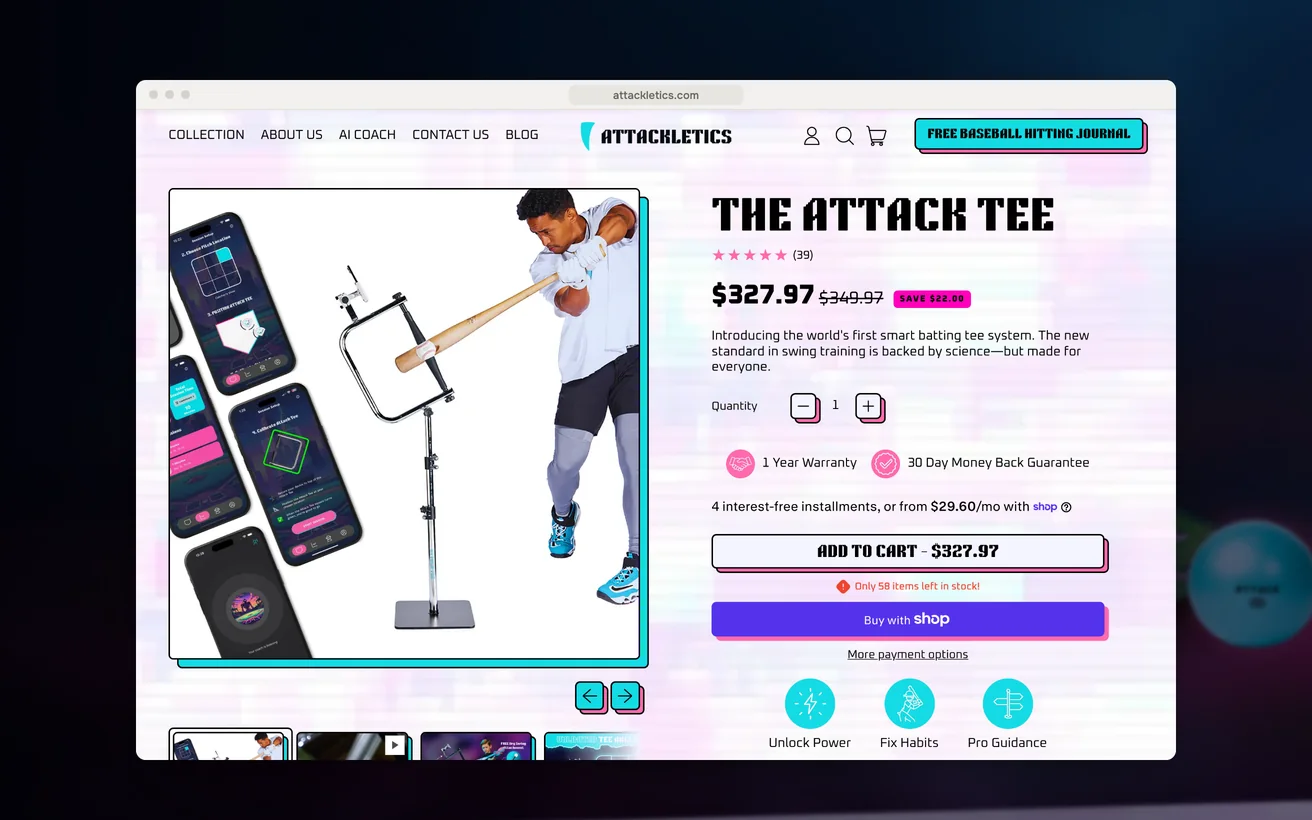
Attackletics doubled sales with a neon storefront that opens like a plain one.

A smart batting tee and a finished coaching app, sold from a stock theme. Rebuilt in neon and scanlines, without making the phone pay for it.

Sales
2×
Order value
+35%
View case study

eCommerce

Applied Vision Baseball left a coaching site for a store that shows gear working.

Vision and swing trainers that make no sense in a photograph. Moved out of a coaching site and onto a storefront built around the demonstration.

Conversion
+46%
Organic traffic
+56%
View case study

eCommerce

CocoaTown made a deep machinery catalogue shoppable and lifted sales 28%.

Bean-to-bar and nut-butter machinery sold in over a hundred countries. A deep technical catalogue, restructured around batch size and the stage a maker is stuck at.

Sales
+28%
Organic traffic
+39%
View case study

11Start a project

Let us look at your numbers.

Send the metric that is stuck and we will tell you honestly whether we agree.

  1. Within 1 business dayWe read it properly and reply with real questions, not a templated brochure.
  2. A 30-minute scoping callFree, no obligation. We tell you honestly if we are the wrong fit.
  3. A written proposalScope, timeline, deliverables and the success metric, all on one page.

You'll hear back from a senior lead, never a bot.

    What do you need?

    NDA on request · Details never shared

    Question about your project? Tell us in 30 seconds and a senior lead replies.